Crossword Challenge
- 4.6
- Rating
- 500.00K
- Installs
- Free
- Price
 Analysis by App-foxy
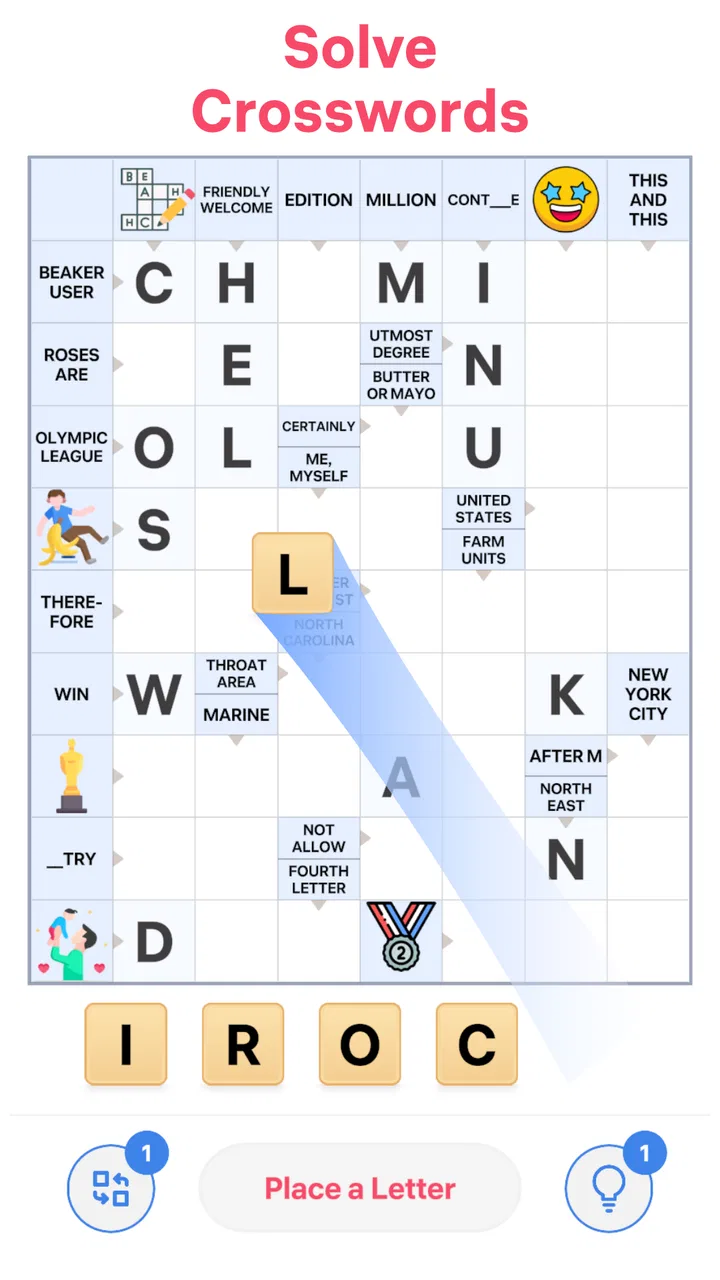
I spent time with Crossword Challenge, a free word game from NOCTURNAL, and found it easiest to appreciate as a quiet, low-pressure way to exercise vocabulary. It is built around crossword solving rather than fast reactions, elaborate storytelling, or competitive action. That makes it a natural fit for a short break, a relaxed evening, or anyone who prefers games that reward thoughtfulness instead of speed.
The basic appeal is immediately clear: you read a clue, consider possible answers, and work through the crossing letters until the puzzle begins to make sense. That familiar format gives the game a comfortable starting point, but the real question is whether it offers enough value beyond being another crossword app. My answer is cautiously positive. It is accessible, easy to pick up, and suitable for a broad audience, although players who want deep customization, a strong social layer, or a completely unrestricted free experience may find its limits more noticeable.
How Crossword Challenge feels in everyday use
The game belongs to the word category, and its store summary presents it as a relaxing way to train your brain. In practice, that description works best when “train” is understood as gentle mental engagement. I would not treat it as a formal learning tool or a substitute for structured vocabulary study. Instead, it gives you repeated opportunities to recall words, interpret clues, notice patterns, and use crossing letters to correct an initial guess.
You May Also Like

 Blood Strike: 2.5 Anniversary
Blood Strike’s Loadouts Turn Every Drop Into a Tactical Gamble
A close look at Blood Strike’s custom loadouts: how fast access to signature weapons reshapes its battle royale rhythm, rewards preparation, and narrows the gap between fights.

 Pandora - Music & Podcasts
Pandora’s Music Is Easy to Start, but Harder to Recover
Pandora’s strength is its low-effort path from a seed to a station. Its weak spot is how much confidence it asks you to place in connection, setup, and quiet recovery.

 8 Ball Pool
 Is Built on Rivalries, Rematches, and Routine
A close look at the rivalries, rematches, shared routines, and unanswered safety questions that turn a quick pool match into a persistent mobile community.

 Samsung Music
’s Quiet Strength Is Playing What You Already Own
Its reach comes less from spectacle than from dependable access to a personal library. That simplicity is both the app’s strongest retention engine and its ceiling.

 AccuWeather: Weather Radar
AccuWeather Review: A Quick, Clear Forecast for Everyday Decisions
For everyday plans, the best forecast is the one you can understand quickly. AccuWeather makes rain timing, radar, and local conditions easy to act on, with a few trade-offs.

 Hill Climb Racing
Why Hill Climb Racing Still Turns Crashes Into One More Run
A tiny car, a bumpy hill and one more upgrade: Hill Climb Racing keeps resurfacing because its simple chaos makes every near-miss feel personal.
More From Our News Desk



That distinction matters because the experience is not about memorizing a lesson and then being tested on it. The learning happens incidentally. A clue may bring a half-remembered word to mind, while a few confirmed letters help narrow the possibilities. When I approached a puzzle with patience rather than trying to force every answer immediately, the game felt more satisfying and less like a test I needed to pass.
The familiar crossword structure also makes the game approachable for people who do not usually play mobile games. There is no need to learn a complicated control scheme or understand a fictional world before getting started. The main activity is reading, thinking, entering an answer, and using the board to guide the next decision. For a family member who enjoys printed puzzles but does not care about action games, this is the sort of mobile title I would suggest first.
A practical game for short breaks
One of its strongest use cases is the small gap in an ordinary day. Imagine waiting for an appointment, sitting on a train, or taking a quiet coffee break. A crossword can fill that time without demanding the same continuous attention as a video or a fast-paced game. You can pause mentally after solving one clue, return to the grid, and continue from the letters already in place.
I also like the way this format gives a break a clear boundary. Instead of opening an endless feed and losing track of time, you can focus on a puzzle and stop when your attention starts to fade. That does not make every session short, of course, but the structure encourages a more deliberate kind of play. It is particularly suitable for people who want something calming before bed, provided they personally find word solving relaxing rather than mentally stimulating.
Another useful approach is to treat difficult clues as prompts for flexible thinking rather than obstacles. If an answer does not come quickly, I move to a crossing clue, fill in what I can, and return later. This simple workflow is more effective than repeatedly staring at the same blank. The grid becomes a source of hints, so progress often comes from changing direction rather than knowing every answer immediately.
What makes the format more rewarding than it first appears
The best part of a crossword game is not simply recognizing words. It is managing uncertainty. A clue can suggest several answers, but the crossing letters gradually remove the wrong options. That process creates a small chain of reasoning: form a guess, test it against the grid, revise it when another clue disagrees, and eventually reach a solution that fits the whole pattern.
For that reason, I recommend resisting the urge to fill an uncertain answer too early. A plausible word can feel helpful, but if it is wrong, it may make several nearby clues harder to read. I found it more efficient to mark the idea mentally, solve another section, and return once the board offered more evidence. This is a small habit, but it changes the game from random guessing into a more controlled puzzle-solving routine.
A second useful habit is to use the easiest clues as anchors. Short, familiar answers can establish letters across multiple entries, which then makes more ambiguous clues manageable. Players who normally begin with the clue that looks most interesting may get better results by first building a reliable foundation. That approach is especially helpful when the puzzle feels intimidating at the beginning.
The third insight is about pacing. Crossword Challenge works better when I allow myself to stop before frustration takes over. A short pause can make a clue look different when I return, while pushing through every uncertain entry can turn a relaxing session into a chore. The game rewards persistence, but not necessarily stubbornness. Knowing when to switch to another part of the grid is a genuine skill here.
Cost, access, and what the purchase range means
The game is free to download and suitable for everyone by its age rating, which gives it a broad audience. That free entry point is important: you can decide whether the crossword style suits you without paying before trying it. For someone comparing several word games, this lowers the risk of experimenting, especially if the goal is simply to have a convenient puzzle available on a phone.
There are in-app purchases ranging from $1.99 to $99.99 per item. That range tells me the free access and the paid value should be considered separately. The free version may be enough for a casual player who only wants occasional crossword sessions, while a committed player may judge the optional purchases by how much they improve continued play. I would not recommend buying anything immediately. I would first establish whether the free experience already fits your habits and whether you actually need whatever a purchase provides.
For me, the sensible value test is simple: if I am opening the game regularly and using it as a dependable puzzle break, a small purchase could be easier to justify than a large one. The highest listed price is a serious commitment for a word game, so I would approach it carefully rather than assuming that more spending automatically creates a better experience. A free game can still deliver worthwhile entertainment without becoming a paid obligation.
This also affects how I would recommend it to different people. A parent looking for an age-appropriate word activity can try it without an upfront cost, while a dedicated crossword enthusiast should compare the available free play with the price of any optional additions before deciding. The key point is not that paid content is automatically bad; it is that the value depends on how often you play and what you expect from the game.
Strengths that matter during real play
The most obvious strength is accessibility. The crossword format is recognizable, and the game does not ask you to master a complicated system before you can enjoy it. That makes it a good recommendation for someone who wants a word game rather than a broader mobile gaming experience. It can also suit different levels of confidence because an experienced solver can move quickly while a newer player can take time to reason through the grid.
The second strength is its calm identity. Many mobile games are designed around constant rewards, rapid rounds, or pressure to keep reacting. Crossword Challenge offers a slower alternative. Even when a clue is difficult, the challenge is mental rather than physical. I can play while feeling focused without feeling rushed, which is exactly what I want from a relaxing word title.
The third strength is the way the crossword grid supports self-correction. A wrong answer is not isolated; its relationship with crossing entries gives you information. That makes mistakes useful. Instead of simply being told that a response failed, you can often understand why it does not belong once the surrounding letters develop. This gives the solving process more depth than a basic word-guessing game where each attempt stands alone.
The game has also attracted a substantial audience, with over one hundred thousand installs and a 4.5 average from around six thousand ratings. Those figures do not guarantee that every player will enjoy it, but they do suggest that the basic concept connects with many people. I would read that popularity as reassurance that the game is worth trying, not as proof that it replaces every other crossword option.
Where the experience may not suit everyone
The same simplicity that makes the game approachable can make it feel limited to players seeking a richer package. If you want a strong narrative, character progression, dramatic presentation, or real-time competition, this is probably the wrong category of game for you. Its appeal depends on enjoying clues and word relationships. Without that interest, the calm pace may feel slow rather than relaxing.
There is also a natural ceiling to the format. Once you have played many crossword puzzles, you may become more sensitive to clue style, repetition, or difficulty balance. A player who expects a highly personalized challenge may want more control over puzzle selection or solving conditions than this compact mobile experience provides. I would not choose it as my only word game if variety and advanced options were my top priorities.
The purchase range is another point of caution. Because the game is free to start but includes items priced as high as $99.99, I would keep spending deliberate and review each purchase screen carefully. Someone who is comfortable with free play may never need to spend anything. Someone who becomes deeply invested should set a personal limit in advance. That is not a criticism of the crossword format itself, but it is an important part of judging the game’s value responsibly.
Players should also be realistic about what “brain training” means here. Solving clues can exercise recall, attention, and flexible reasoning, but I would not use the game to make broad claims about measurable cognitive improvement. Its value is more immediate and practical: it gives your mind something structured to work on. That is enough to make it worthwhile, but it is better to enjoy the activity for what it is than to expect a formal training program.
Who will get the most from it
I think Crossword Challenge is best for casual solvers, crossword newcomers, and people who want a peaceful alternative to reflex-based games. It is also a reasonable choice for anyone who enjoys wordplay but wants the convenience of having puzzles available on a phone. The age rating of Everyone makes it broadly approachable, although individual comfort with clue difficulty will naturally vary.
It can be especially useful for a person trying to replace unstructured phone scrolling with a more focused activity. Opening a crossword during a waiting period gives the mind a defined task, and the crossing letters create a natural reason to keep thinking. I would recommend starting with a short session, solving the obvious entries first, and stopping when the game begins to feel like work. That routine preserves the relaxing quality better than treating every puzzle as a challenge to complete at any cost.
It is less suitable for people who need a completely offline hobby, a detailed learning curriculum, or a game with extensive social interaction. I would also point experienced crossword fans toward a more specialized alternative if they want highly specific puzzle traditions, advanced difficulty controls, or a large competitive community. Crossword Challenge is more appealing as an approachable mobile option than as a definitive destination for every kind of crossword expert.
Technical basics and long-term confidence
The game was released on April 21, 2025, and the current version is 208. It runs on Android 6.0 or later, so it is available to people using a wide range of Android devices. Those details make it easier to judge compatibility before installing, particularly if you keep an older phone for basic games and everyday tasks.
NOCTURNAL is the developer behind the title, and the game has received around two hundred and fifty written reviews alongside its broader rating activity. I see that combination as useful context when deciding whether to try it: there is enough public response to show that people are actively using the game, but personal preference still matters more than a single average score. Crossword enjoyment is subjective because clue wording, pacing, and difficulty can affect players very differently.
My own advice is to evaluate it over several sessions rather than judging it after one puzzle. The first session tells you whether the controls and general style feel comfortable. A few more sessions reveal whether you enjoy returning to the grid, whether the difficulty keeps you interested, and whether the free access is sufficient for your routine. That is a better test of value than downloading it, playing for a minute, and making a decision based only on first impressions.
My recommendation after weighing the trade-offs
I recommend Crossword Challenge as a free starting point for anyone who wants a straightforward, relaxing word game. Its familiar crossword design, broad age rating, and low barrier to entry make it easy to suggest to a friend who wants something thoughtful but not demanding. The strongest experience comes from using the crossing letters strategically, moving between easy and difficult clues, and treating the game as a calm mental break rather than a test of speed.
I would skip it if your priority is a deep competitive system, a formal educational program, or a highly specialized crossword toolkit. I would also avoid rushing into expensive in-app purchases. Try the free experience first, decide how often you genuinely play, and only then consider whether any optional spending matches the value you receive.
Overall, Crossword Challenge earns my recommendation with a clear qualification: it is valuable because it makes crossword solving convenient and approachable, not because it transforms the genre. For casual players, that may be exactly enough. For serious enthusiasts, it is better viewed as a handy companion to more specialized alternatives. If you enjoy quiet puzzles and want a free way to see whether this style fits your daily routine, it is worth installing and judging at your own pace.
FAQs for Crossword Challenge
01What is Crossword Challenge and how does it work?
Crossword Challenge is an engaging word puzzle app that allows users to test their vocabulary skills by solving crosswords. The app features various difficulty levels, daily challenges, and themed puzzles. Users can select a puzzle, input answers by tapping on the grid, and receive hints if needed. It's designed for both casual and serious crossword enthusiasts.
02Is Crossword Challenge available offline?
Yes, Crossword Challenge supports offline play, which means you can enjoy solving puzzles without an internet connection. However, some features like daily challenges and in-app purchases require online access. This makes it convenient to play anywhere, whether you're commuting or in a location without internet service.
03Are there any in-app purchases in Crossword Challenge?
Crossword Challenge offers in-app purchases that allow users to buy hints, remove ads, or unlock premium puzzles. While the app is free to download and play, these optional purchases enhance the gaming experience by providing additional content and convenience, especially for players who prefer an ad-free environment.
04How does Crossword Challenge cater to different skill levels?
Crossword Challenge provides puzzles that range from easy to expert levels, ensuring that both beginners and seasoned players find suitable challenges. The app includes a progressive difficulty system, allowing players to gradually improve their skills. There are also themed puzzles that cater to specific interests, adding variety to the experience.
05Is there a social aspect to Crossword Challenge?
Yes, Crossword Challenge incorporates a social feature where players can connect with friends, share their progress, and compete on leaderboards. This adds a competitive edge and allows users to engage with a community of crossword enthusiasts, making the game more interactive and socially engaging.
Pros
- Intuitive interface enhances user experience.
- Daily puzzles keep content fresh and engaging.
- Various difficulty levels suit all players.
- Offline mode available for uninterrupted play.
- Hints feature helps when you're stuck.
Cons
- Ads can be intrusive during gameplay.
- Limited options for customizing themes.
- Occasional lag on older devices.
- In-app purchases can be pricey.
- No multiplayer mode for competitive play.

Crossword Challenge
Gallery